



Introduction
Pest problems rarely begin with a major infestation. More often, they start with a small warning sign: scratching sounds in the loft, droppings behind kitchen cupboards, a wasp nest developing near the roof, or insects appearing in areas where they normally should not be. Acting on these signs early can make pest problems much easier to manage.
Professional Pest Control in Braintree can help homeowners, landlords, businesses and property managers identify the source of an infestation and choose an appropriate treatment. From rodents and insects to birds and other nuisance pests, a proper inspection can reveal not only what is causing the problem but also how pests are entering the property.
1. Why Pest Problems Should Be Taken Seriously
Pests are more than an inconvenience. Depending on the species and location, an infestation can create hygiene concerns, damage property and interfere with normal day-to-day activities.
Rats and mice, for example, can chew electrical cables, damage insulation and contaminate food storage areas. Insects such as cockroaches, fleas and bed bugs can spread around a property rapidly if the problem is left untreated. Birds may create mess around roofs and gutters, while wasp nests can become a particular concern when they are close to entrances, gardens or frequently used areas.
The difficulty is that many pests remain hidden. A homeowner might see one mouse and assume it is an isolated incident, while others may already be nesting behind walls, under floors or inside cupboards.
This is why early professional assessment can be valuable. Finding the cause of the problem allows treatment to be planned around the property rather than relying on guesswork.
2. Common Pest Problems Found in Braintree
Different buildings attract different pests. Older properties may have gaps around brickwork, roofing or pipework, while commercial premises can have additional sources of food, waste and shelter.
A professional Braintree Exterminator can deal with a wide range of common pest problems, including:
- Rats and mice
- Wasps and wasp nests
- Bed bugs
- Fleas
- Ants
- Cockroaches
- Moths
- Cluster flies
- Squirrels
- Pigeons and other nuisance birds
The appropriate response depends on the species, the size of the infestation and where the pests are located.
Rat and Mouse Problems
Rodents can enter surprisingly small openings around doors, pipes, vents, drains and damaged areas of a building. Once inside, they may move between wall cavities, lofts, kitchens and other concealed spaces.
Typical warning signs include droppings, gnaw marks, scratching noises at night, damaged food packaging, nesting material, unpleasant smells and greasy marks along commonly used routes.
Rats can also create problems outdoors around sheds, bins, composting areas and food sources. If signs are noticed, delaying action can give rodents additional time to establish nesting areas.
Mouse problems should also be addressed quickly. Their small size allows them to move through narrow gaps, making it difficult to determine their entry route without a proper inspection.
Wasps and Other Insects
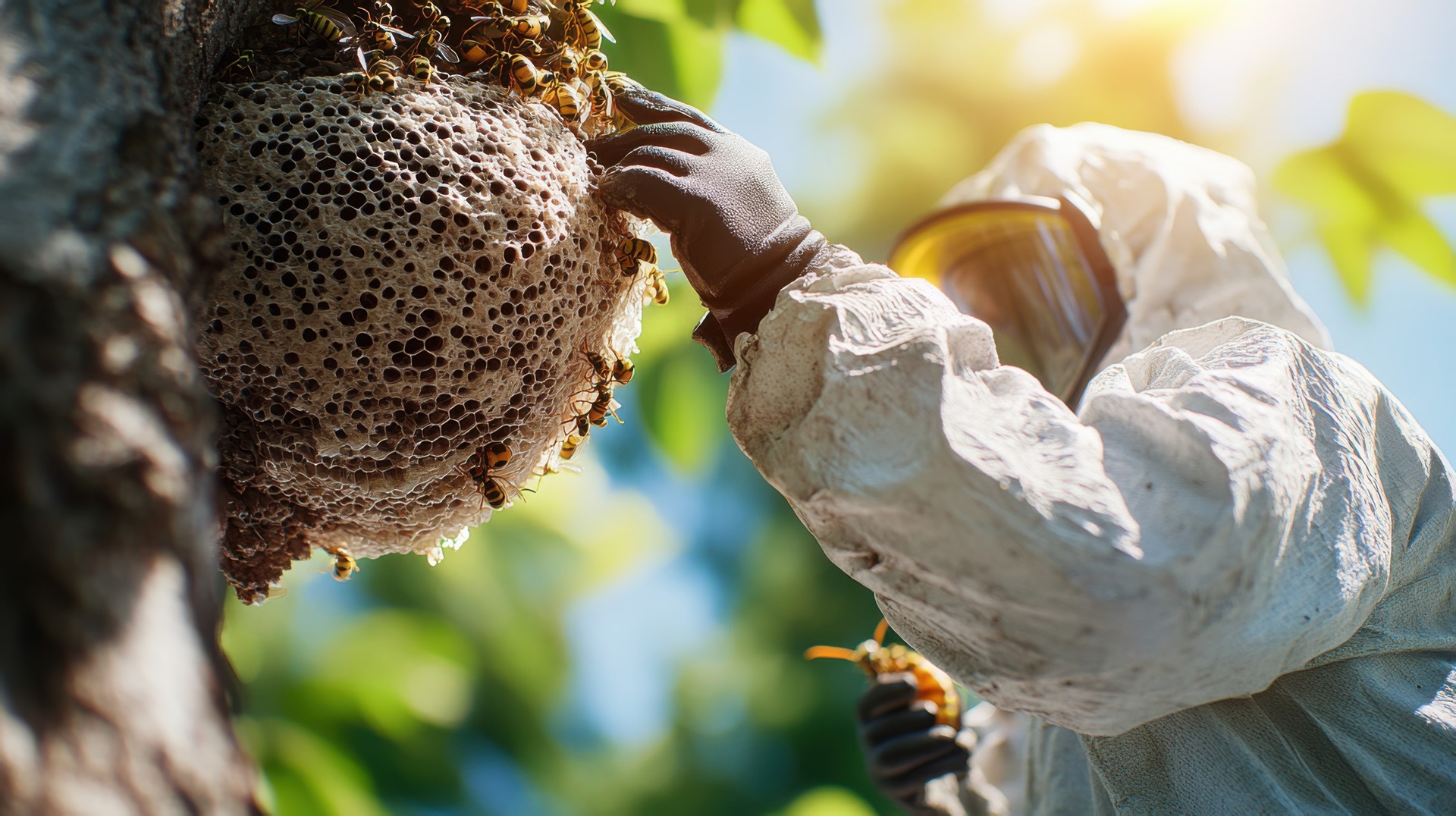
Insect infestations can develop quickly, particularly during warmer periods. Wasps may build nests around roof spaces, wall cavities, sheds and other sheltered locations.
Other insects require different approaches. Bed bugs can hide around mattresses, furniture and cracks, while fleas may remain in carpets and other areas where pets or people spend time. Cockroaches can be particularly persistent when food, moisture and hiding places are readily available.
Professional treatment should therefore begin with identifying the pest rather than simply applying a generic product.
3. What Happens During a Professional Pest Inspection?
A good pest control service should involve more than simply arriving and applying treatment.
An inspection normally begins with questions about what the occupants have noticed. Sounds, droppings, sightings, damaged materials and the location of activity can all help establish what is happening.
The technician can then examine relevant areas for:
- Signs of pest activity
- Droppings and nesting material
- Gnawing or physical damage
- Potential entry points
- Food and water sources
- Harbourage areas
- Possible routes used by pests
This information helps determine the most suitable treatment strategy.
For example, if rodents are entering through gaps around pipework or damaged vents, treating the existing infestation without addressing those weaknesses may leave the property vulnerable to another problem later.
4. Benefits of Professional Pest Control in Braintree
There are several advantages to dealing with an infestation professionally rather than allowing the problem to develop.
Faster Identification
Different pests leave different signs. Professional experience can help identify the likely species and source of activity more efficiently.
Targeted Treatment
Once the problem has been assessed, treatment can be selected according to the circumstances. This can be more effective than repeatedly trying different household products without knowing exactly what pest is involved.
Reduced Risk of Recurring Problems
Pest control is not only about removing the pests currently present. Identifying entry points, food sources and harbourage areas can help reduce the possibility of future activity.
Safer Application
Professional treatments can be planned with the surroundings in mind. Homes may contain children and pets, while businesses may have employees, customers or vulnerable individuals present.
Discreet Service
Pest problems can feel embarrassing, especially for homeowners, landlords and businesses. A discreet and professional approach allows the issue to be dealt with without unnecessary attention or disruption.
5. Domestic Pest Control for Homes and Rental Properties
A pest infestation can make a home uncomfortable very quickly. Scratching noises at night, insects around sleeping areas or rodents appearing in the kitchen can create considerable stress.
Domestic pest control can be suitable for houses, flats, apartments, rented accommodation, garages, sheds, gardens and other residential areas.
Landlords can also benefit from early investigation when tenants report pest activity. Establishing where the problem is located and what may be causing it can help determine the appropriate next step.
The goal should be to resolve the immediate issue while also identifying practical measures that can make the property less attractive to pests.
6. Commercial Pest Control and Business Premises
Businesses have additional reasons to take pest activity seriously. A pest problem can disrupt operations, affect customer confidence and create hygiene concerns.
Restaurants, food-related businesses, warehouses, offices, rental properties and other commercial premises may all experience pest activity for different reasons.
Professional pest control can be arranged with minimal disruption where possible. A site assessment can identify vulnerable areas such as waste storage points, entrances, kitchens, roof spaces and poorly sealed openings.
Regular monitoring or ongoing support may also be useful for premises where pest prevention is an important part of maintaining a clean and well-managed environment.
7. Prevention Is an Important Part of Pest Management
Removing pests is only one part of solving the problem. Prevention can be just as important.
Property owners can reduce the likelihood of future infestations by keeping food in sealed containers, maintaining good waste management, cleaning food preparation areas and reducing unnecessary clutter.
It is also worth checking the building itself. Small gaps around doors, pipes, vents and damaged brickwork can provide access for rodents and other pests. Broken vents, roof damage and openings around service pipes should be repaired where necessary.
Outdoor areas should also be maintained. Overflowing bins, accessible pet food, standing water, overgrown vegetation and unmanaged waste can create attractive conditions for various pests.
Professional advice can help identify weaknesses that may not be immediately obvious to a property owner.
8. Choosing the Right Braintree Exterminator
When selecting pest control support, price should not be the only consideration. A reliable service should provide clear information about the problem, explain the proposed treatment and offer practical advice about prevention.
Look for a company that:
- Has appropriate pest management experience
- Uses suitable and targeted treatment methods
- Provides domestic and commercial services
- Works professionally and discreetly
- Explains the treatment before carrying it out
- Considers children, pets, customers and staff
- Can advise on prevention and proofing
- Offers follow-up support when required
A professional approach should leave the customer understanding what has been found, what is being done and what they can do afterwards to reduce the chance of another infestation.
Conclusion
Pest problems are easier to manage when they are recognised before they become established. Whether the first warning is a scratching noise, unexplained droppings, a wasp nest, damaged packaging or insects appearing indoors, it is worth investigating the cause rather than waiting for the situation to worsen.
Reliable Pest Control in Braintree can provide a structured way to identify the pest, locate activity, apply an appropriate treatment and highlight potential prevention measures. From residential properties and rental accommodation to commercial premises, professional pest management can help restore a cleaner, safer and more comfortable environment.
If signs of an infestation are already present, getting advice from a qualified Braintree Exterminator can be a sensible first step. Early action may help limit property damage, prevent pests from spreading and make the overall problem easier to resolve.