



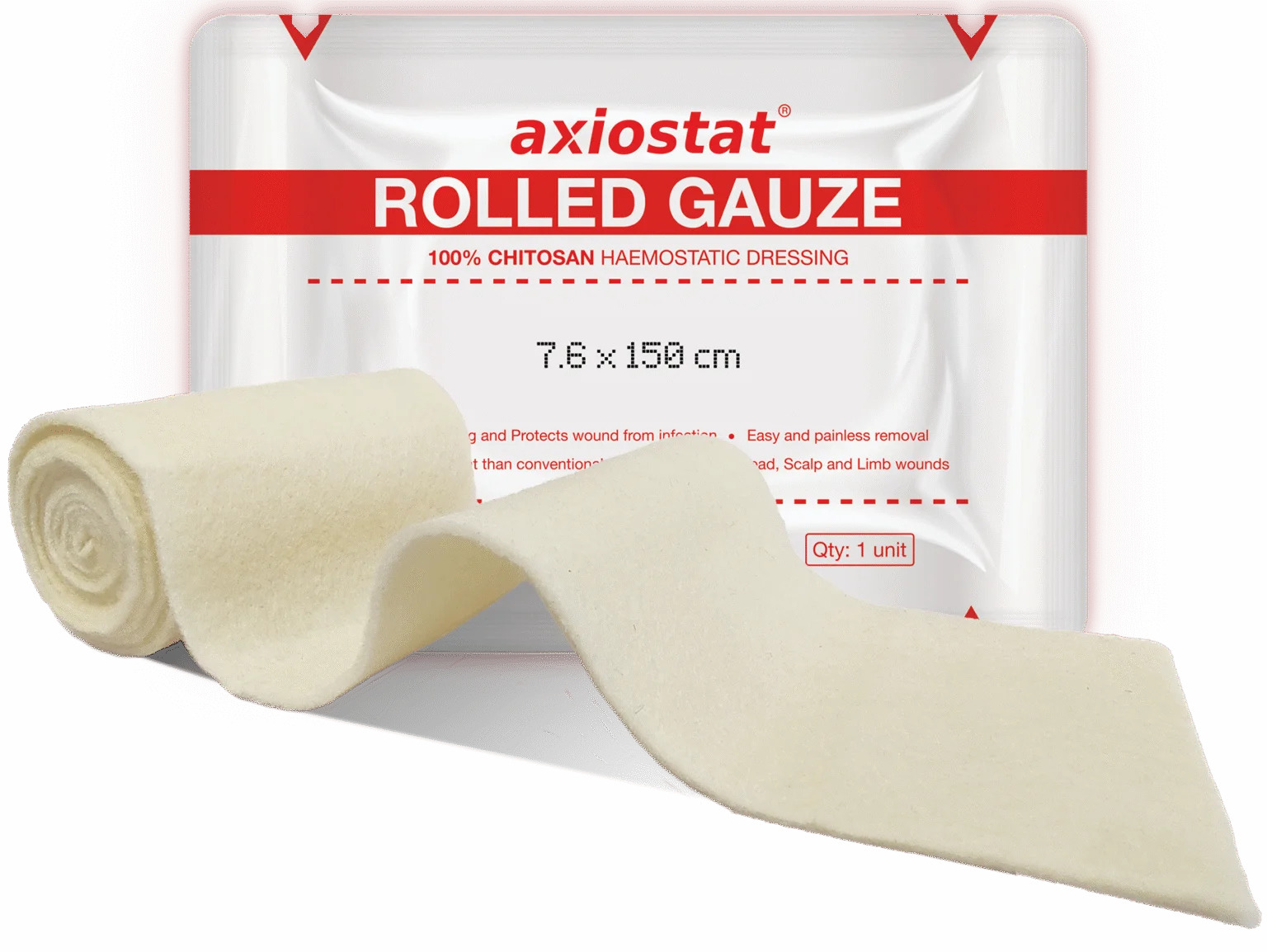
Bleeding has a way of changing the atmosphere instantly. One moment things are calm, the next everything feels urgent. When blood loss is heavy, there is no space for hesitation. The focus narrows. Stop the bleeding. Stabilize. Then move forward.
In trauma care, speed matters. Not rushed movement, but effective action. The tools used in those moments need to work without complication. That is where Axiostat Hemostatic Gauze comes in.
It was not designed to look impressive on a shelf. It was designed to perform when bleeding needs to be controlled quickly and reliably.
Why Faster Bleeding Control Matters
The human body can compensate for minor blood loss. Severe bleeding is different. It can overwhelm natural clotting mechanisms, especially in deep wounds or high-pressure injuries. When bleeding continues unchecked, the risk of shock increases rapidly.
In pre-hospital settings, emergency rooms, industrial sites, or field operations, the goal is simple: control hemorrhage as early as possible. Every minute saved reduces further blood loss and improves the patient’s stability.
Faster control does not mean reckless action. It means using a solution that supports the body’s natural response instead of working against it.
What Makes Axiostat Different
Standard gauze primarily absorbs blood. That absorption is useful, but in cases of heavy bleeding, it may not be enough. Axiostat Hemostatic Gauze goes beyond absorption.
Axiostat is made using chitosan-based technology. Chitosan is a biopolymer that is well known for its ability to interact with blood components. When it is applied directly to a bleeding surface, Axiostat creates a strong mechanical barrier. This barrier is what helps to create a stable clot and promotes rapid hemostasis.
One of the benefits of this product is that it does not produce heat when it forms a clot. Some of the older hemostatic agents on the market used exothermic reactions, which could potentially damage tissue. Axiostat is designed to prevent this from happening.
In practical terms, this means responders can focus on firm wound packing and pressure without worrying about secondary injury from the product itself.
How It Supports Rapid Action in Real Situations
Speed in trauma care often depends on simplicity. Axiostat Hemostatic Gauze is straightforward to apply. The process involves:
- Exposing the wound
- Packing the gauze firmly into the bleeding source
- Applying sustained pressure
- Securing with a pressure dressing if required
There is no mixing. No activation step. No specialized equipment.
This makes it easier to make decisions quickly in a high-stress situation. Regardless of whether it is used by medical professionals or safety teams, the app will be the same.
If the bleeding is slowed down quickly, there is time to focus on other things. This is significant. It gives room to manage the patient.
Designed for Challenging Conditions
Bleeding is not always present in controlled settings. It occurs in accident scenes, industrial areas, disaster areas, and remote locations.
Axiostat is portable and convenient to transport. It can be accommodated in trauma kits, emergency kits, and first-aid kits in vehicles. The product packaging prevents contamination and is always ready for use.
Another important consideration is reliability. In trauma care, uncertainty increases stress. Products that perform predictably reduce hesitation. Axiostat has been adopted across emergency services and field applications because it aligns with those expectations.
Supporting the Body’s Natural Response
One of the reasons Axiostat supports faster bleeding control lies in how it works with the body rather than replacing it. The chitosan material interacts with blood cells to promote clot formation at the wound interface. This interaction helps create a strong seal at the injury site.
By supporting natural clotting while providing a physical barrier, Axiostat enhances stability during the critical first minutes after injury.
It is important to understand that no hemostatic product replaces surgical care. Axiostat is meant for immediate hemorrhage control. It buys time. It supports stabilization. It helps prevent further blood loss while advanced treatment is arranged.
In trauma care, time is one of the most valuable resources available.
Training and Confidence
Even the best product requires the right application. Wound packing and pressure are still necessary. Axiostat is meant to make this process more effective, but it still requires technique.
The organizations that include Axiostat in their kits also teach its application in their training courses. The more they are familiar with it, the less uncertain they are. When they apply it, they do it with confidence.
Confidence translates to faster and more decisive action. And in stopping bleeding, decisiveness is a lifesaver.
A Practical Approach to Preparedness
Preparedness is rarely dramatic. It involves small, thoughtful decisions made in advance. Including a reliable hemostatic gauze in trauma kits is one of those decisions.
Axiostat offers a balance of simplicity, effectiveness, and tissue safety. It supports faster bleeding control not by adding complexity, but by refining what already works: pressure and clot formation.
In moments when bleeding must be controlled quickly, having the right tool available changes the outcome. Axiostat was developed with that reality in mind.
Frequently Asked Questions
1. How does hemostatic gauze actually stop bleeding faster than regular gauze?
Regular gauze mainly absorbs blood. Axiostat interacts with blood components to form a strong mechanical seal at the wound site. This supports quicker clot formation when combined with proper pressure.
2. Is Axiostat hemostatic gauze safe for use on deep wounds?
Yes, it is safe for use on external bleeding where packing of the wound is feasible. It does not produce heat when in use, which is an advantage in preventing damage to the surrounding tissue. However, it is only a temporary solution until medical attention is sought.
3. Can hemostatic gauze be used by non-medical personnel?
Yes, it can be used by non-medical personnel if they have the necessary training in bleeding control.
4. Does hemostatic gauze eliminate the need for a tourniquet?
Not necessarily. In cases of severe limb bleeding, a tourniquet may still be needed. Axiostat can be used as part of a larger strategy for bleeding control, depending on the situation.
5. Should hemostatic gauze be removed if bleeding slows down?
No. Once it has been applied and bleeding has been controlled, it should be left in place until medical professionals have a chance to evaluate the wound in a controlled setting.